How to Become a Psychologist in New York
To become a licensed psychologist in New York, you need a doctoral degree (PhD or PsyD) from an approved program, 3,500 hours of supervised experience, and a passing score on the EPPP Part 1 exam. The New York State Education Department oversees licensure. The full process typically takes 10+ years from bachelor’s degree to license.
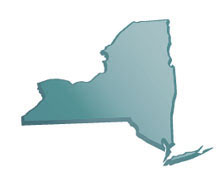
New York has a large concentration of practicing psychologists. Private practices in Manhattan, community mental health centers in the Bronx, hospital systems in Buffalo. The state’s size and diversity create demand across nearly every psychology specialty. That demand comes with a rigorous licensing standard to match.
The New York State Education Department (NYSED) Office of the Professions administers the psychology license program. Holding a license lets you work independently as a psychologist, use the title professionally, and provide psychological services without supervision. Without it, none of those things are legally permitted in New York.
According to the U.S. Bureau of Labor Statistics, clinical and counseling psychologists in New York earn an average annual salary of around $110,000 or more. The path to that credential is demanding, but it’s well-mapped. Here’s what the process looks like.
Below you’ll find our step-by-step guide to earning your psychology license in New York, including what each stage requires and what to expect along the way.


Education Requirements
New York requires a doctoral degree in psychology for licensure. That’s the non-negotiable baseline. The degree must come from a program registered by NYSED as licensure-qualifying, accredited by the American Psychological Association (APA) in health service psychology, or determined by NYSED to be a “substantial equivalent.”
New York accepts two types of doctoral degrees. A Doctor of Philosophy (PhD) in Psychology is research-oriented and suited for people who want to combine clinical work with teaching or academic research. A Doctor of Psychology (PsyD) is practice-focused, designed for those who want to work directly with clients in clinical or counseling settings. Both qualify for licensure in New York. Your choice should reflect your career goals, not just what’s available. If you’re weighing a psychology license against other mental health credentials, our guide to how a psychology license compares to clinical social work licensure covers the key differences.
Before doctoral work, you’ll need a bachelor’s degree. Psychology is the most direct path, but it doesn’t have to be your undergraduate major. Graduate programs will want to see relevant coursework regardless. A master’s degree isn’t separately required by New York, though many doctoral programs incorporate one, and some applicants pursue a standalone master’s before applying to doctoral programs to strengthen their application or explore specialization options.
Doctoral programs in psychology typically take five to seven years to complete, including coursework, practicum, and dissertation. Add your undergraduate years and post-doctoral experience, and the full timeline to licensure generally runs 10+ years. For a closer look at how these two degree paths differ in structure and career outcomes, see our overview of the differences between a PhD and PsyD in psychology.
Supervised Experience Requirements
A doctoral degree alone won’t get you licensed. New York requires 3,500 total supervised hours, typically split between predoctoral and postdoctoral experience as approved by NYSED. You must also be at least 21 years old at the time of your licensure application.
| Experience Phase | Hours | When It Occurs |
|---|---|---|
| Predoctoral (internship or practicum) | Up to 1,750 hours | While completing your doctoral program |
| Postdoctoral supervised practice | At least 1,750 hours | After earning your doctorate |
| Total required | 3,500 hours | Across both phases, as approved by NYSED |
Supervision must meet NYSED requirements and be provided by a qualified licensed psychologist affiliated with the setting. Regular supervision is required, including at least one hour per week for full-time experience, as defined by NYSED.
You’ll also need to complete the Child Abuse Identification and Reporting requirement before licensure, as required under Section 6507(3)(a) of the NY Education Law. This means completing approved coursework or training from a provider recognized by the NYSED Office of the Professions.
The EPPP Examination
Once you’ve completed your doctoral degree, you can apply to sit for the Examination for Professional Practice in Psychology (EPPP), administered by the Association of State and Provincial Psychology Boards (ASPPB). New York only requires Part 1 of the EPPP, which tests foundational knowledge across core psychology domains. Part 2, which assesses skills, has not been adopted in New York and is not required for licensure here.
You can take the EPPP before completing your postdoctoral experience hours. Many candidates do this while working toward their remaining supervised hours under a limited permit.
Applying for Your License and the Limited Permit
Most applicants use New York’s limited permit program to bridge the gap between completing their doctoral degree and earning full licensure. A limited permit authorizes supervised practice for up to one year and can be renewed for two additional one-year periods, giving you up to three years total to complete remaining experience and examination requirements.
To apply for a limited permit, you must have completed all doctoral degree requirements (including your dissertation) and met the moral character standard. Submit your application through NYSED’s Office of the Professions along with the required fee and documentation from your university confirming degree completion.
Full licensure follows once NYSED has confirmed your education, experience, and examination requirements are met. You’ll want to keep close track of your supervised hours and supervisor credentials throughout the process. New York’s rules on what counts are detailed, and gaps in documentation can delay your application.
License Renewal and Continuing Education
A New York psychology license is valid for life, but you must register it every three years to remain in good standing. Beginning January 1, 2021, New York requires licensed psychologists to complete 36 hours of continuing education (CE) from a NYSED-approved provider during each three-year registration period. This was a change from earlier practice, when psychology was one of the few licensed professions in New York without a CE requirement.
New York does not offer automatic reciprocity, but does allow licensure by endorsement for psychologists already licensed in another state. To qualify, you must have completed five years of licensed practice in the ten years before applying and meet NYSED’s education and examination standards. Without meeting that experience threshold, you’ll need to apply for initial licensure.
Psychology Specializations in New York
New York’s license covers the broad practice of psychology, but most licensed psychologists work within a specialty. Your doctoral program is where specialization begins, and the direction you choose shapes your career trajectory more than almost any other decision in the process.
Common specializations in New York include clinical psychology, counseling psychology, school psychology, forensic psychology, and neuropsychology. Clinical psychologists diagnose and treat mental health conditions across a range of settings, from outpatient clinics to hospital inpatient units. Counseling psychologists work with individuals navigating life transitions, adjustment challenges, and personal development. School psychologists work within K-12 systems and must meet separate certification requirements through NYSED in addition to the standard psychology licensure process. Forensic psychologists apply psychological expertise within legal and criminal justice settings. Neuropsychologists assess brain function and cognitive impairment, often working in medical or rehabilitation settings.
Your choice of doctoral program, including whether you pursue a PhD or PsyD and which APA-accredited track you enter, will largely determine which of these paths is available to you.
Frequently Asked Questions
Does New York accept a PsyD for psychology licensure?
Yes. New York accepts both the Doctor of Philosophy (PhD) and the Doctor of Psychology (PsyD) for licensure, provided the program is registered by NYSED as licensure-qualifying or accredited by the APA in health service psychology. Your choice between the two should depend on whether you’re more drawn to research and academia or direct clinical practice.
How long does it take to become a licensed psychologist in New York?
The full process typically takes 10+ years. A bachelor’s degree takes about four years, a doctoral program takes five to seven years on average, and postdoctoral supervised experience adds at least one additional year. The EPPP can be taken before postdoctoral hours are completed, which helps shorten the overall timeline somewhat.
What is the limited permit for New York psychologists?
The limited permit is a temporary authorization issued by NYSED that allows you to practice psychology under supervision while completing your remaining experience or examination requirements. It’s valid for one year and can be renewed up to two additional times, giving a maximum of three years of permitted practice. Most applicants use it to accumulate postdoctoral hours after completing their doctorate.
Does New York require continuing education for psychologists?
Yes, as of January 1, 2021, New York requires licensed psychologists to complete 36 hours of continuing education from an approved provider during each three-year registration period. This was introduced as part of broader updates to the state’s professional licensing framework.
Is there reciprocity for out-of-state licensed psychologists moving to New York?
New York does not offer automatic reciprocity, but does allow licensure by endorsement. To qualify, you must have completed five years of licensed practice in the ten years before applying and meet NYSED’s education and examination requirements. Without meeting that experience threshold, you’ll need to apply for initial licensure.
Key Takeaways
- A doctorate is required. New York accepts both a PhD and a PsyD, provided the program meets NYSED registration or APA accreditation standards.
- 3,500 supervised hours total. Typically split between predoctoral and postdoctoral experience, as approved by NYSED.
- EPPP Part 1 only. New York requires the knowledge exam but has not adopted Part 2 (skills). You can sit for the exam before finishing postdoctoral hours.
- The limited permit buys you time. Valid for up to three years, it lets you practice under supervision while completing the remaining requirements after your doctorate.
- Plan for 10+ years. The full path from bachelor’s to license is among the longer credential journeys in human services. Choosing the right doctoral program early matters.
- CE is now required. 36 hours every three years from a NYSED-approved provider, a requirement that took effect in 2021.
Exploring psychology programs in New York? Browse doctoral programs by specialty and compare options that meet NYSED’s licensure requirements.
U.S. Bureau of Labor Statistics, May 2024. Salary figures for Clinical and Counseling Psychologists. Salaries based on state data, not school-specific information. Conditions in your area may vary. Data accessed May 2025.